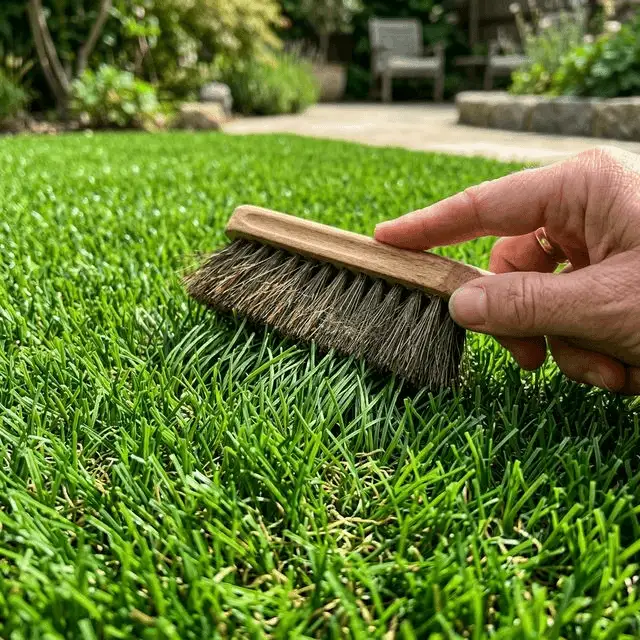
Silica sand in artificial grass: what nobody tells you
If you are thinking about installing artificial grass, someone has probably already told you: “You need to add silica sand for it to look right.”
And that immediately raises questions:
- 👉 Is it compulsory?
- 👉 Is artificial grass better with sand?
- 👉 Will the installation be wrong if I do not add it?
The truth is that silica sand can make sense, but not always. In many modern gardens it is not even recommended. Here is the clear explanation we would give you in person.
Why sand used to be necessary
The first artificial grasses installed in gardens were very similar to football-pitch products. They were light, had no proper backing and lacked the “root” effect that current products have. 👉 Without sand, they simply would not stay in place.
That is why sand (and rubber infill) became popular: it added weight, stability and structure.
What has changed today
Artificial grass has evolved considerably. Current models are denser, recover better after being walked on, use more resistant fibres and include a root-zone backing. 👉 In other words, the grass can now remain stable by itself.
This is where many people continue to apply an old solution to a modern product.
Does sand help the grass recover?
You may also have heard: “The grass stands up better with sand.” There is some truth in that, but the detail matters. Recovery mainly depends on the pile height, density and fibre quality.
Think of it like hair: when it is cut very short it feels stiff; as it grows, it loses that rigidity. 👉 Artificial grass behaves in much the same way.
Here is the key question: if you buy 40 mm grass and add 20 mm of sand, what height do you really have? Exactly: you paid for tall grass and ended up with a shorter surface.
The problem almost nobody explains
Sand does not stay clean. Over time it mixes with dust, soil, dirt and organic debris, creating a progressively more compact layer. Without regular deep brushing and cleaning, 👉 it can harden and reduce drainage. That is where the problems start.
Does silica sand cool artificial grass?
Yes, but with important limits. Sand can retain a little moisture, so after watering or rain it may keep the grass slightly cooler for a while. 👉 This is most noticeable on very hot days.
The effect is temporary, depends on moisture and does not stop the grass heating up in direct sun. It does not make the grass “cold”; it only helps it cool down sooner when it gets wet.
In practice, cooling alone is rarely a good enough reason to add sand. A simple one- or two-minute watering gives a similar effect without the extra material or its maintenance drawbacks.
So: sand or no sand?
👉 In most modern gardens, it is not necessary.
It may make sense in specific situations, such as low-quality grass, very uneven ground or extremely intensive use.
Our recommendation
After many installations, our view is clear: 👉 good artificial grass does not need sand to look good or work properly.
In many cases it stays cleaner, feels more comfortable and requires less maintenance without sand.
A clear conclusion
Silica sand is not bad, but it is not essential either. In many gardens it creates more long-term inconvenience than benefit. 👉 It may provide a little temporary cooling, but that benefit does not outweigh the maintenance and drainage issues it can create.
👉 The important decision is not the sand; it is choosing the right artificial grass from the start.
Would you like to know how much your garden could cost? In just two minutes you can get a close, no-obligation estimate.